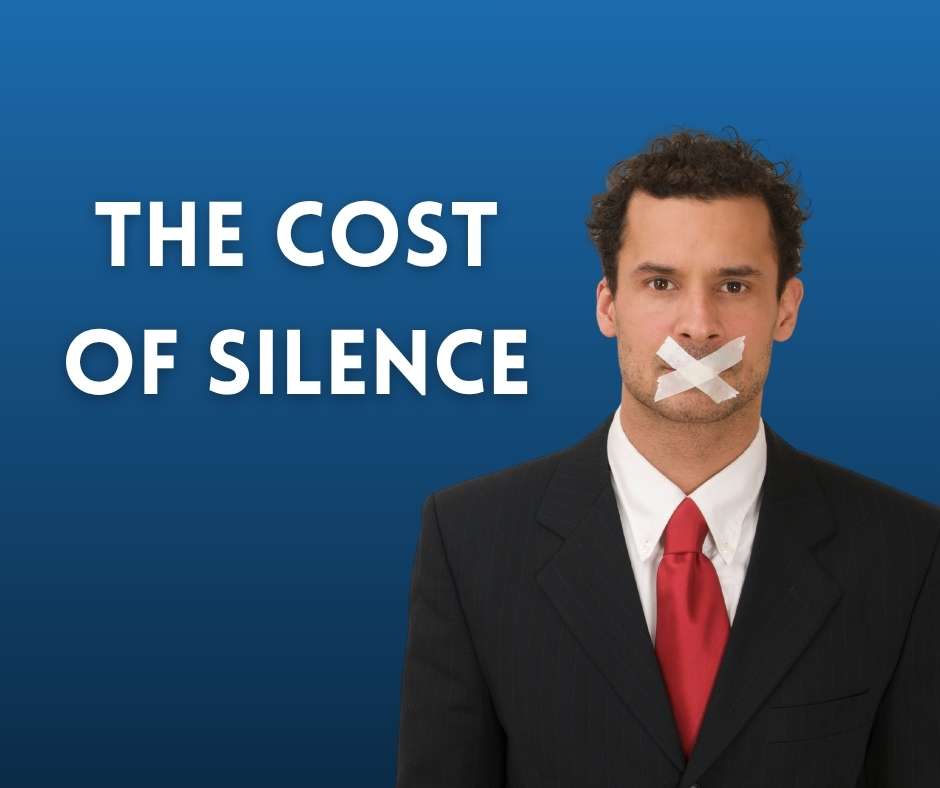
The Most Expensive Words in an Organization: “I Thought About Saying Something…”
Before something becomes obvious…
before it shows up in results, reports, or headlines…
there’s usually a moment most people never see.
Someone sees it.
Something doesn’t sit right.
A number.
A decision.
A direction.
And in that moment, a thought crosses their mind:
“I should say something…”
But they don’t.
And that moment passes.
Most people don’t stay quiet because they don’t care.
It’s not apathy.
It’s not laziness.
It’s a decision.
A quick calculation that happens in real time:
- Is this worth pushing on?
- How will this be received?
- Do I have enough backing?
- Is this my place to say something?
And often, the conclusion is simple: Not this time.
The First Time Is the Hardest
The first time someone holds back, it doesn’t feel significant.
It’s easy to justify.
“Maybe I’m overthinking it.”
“It’s not that big of a deal.”
“Someone else will bring it up.”
And so, they let it go.
Nothing happens.
The meeting moves on.
The decision gets made.
Life continues.
And once it passes… it’s gone.
Then It Gets Easier
The second time is easier.
And by the third time… it doesn’t even register.
Because by then, something has already started to form:
A pattern.
Not written.
Not discussed.
But understood.
How Silence Becomes Culture
No one announces it.
There’s no memo that says: “We don’t challenge things here.”
But people pick up on it. Faster than leaders realize.
They notice:
- What gets questioned — and what doesn’t
- Who speaks up — and how that’s received
- Which conversations continue — and which quietly shut down
Over time, silence stops being a moment…
…and becomes a norm.
What It Looks Like From the Outside
From the outside, everything can look aligned.
Meetings run smoothly.
Decisions move quickly.
There’s little visible friction.
It can even feel efficient.
Until later.
When:
- Issues surface that “no one saw coming”
- Risks become real
- Opportunities were missed
And someone says:
“Why didn’t anyone raise this earlier?”
Someone Usually Did
Or at least…they thought about it.
They saw something.
They felt something.
They just didn’t believe it would matter.
We’ve Seen This Before
We don’t have to look far.
In organizations that later made headlines…
in teams that drifted off course…
in decisions that didn’t age well…
there were moments before the moment.
Quiet ones.
Where someone paused…and chose not to speak.
The Real Cost of Silence
The cost of silence isn’t immediate.
That’s what makes it dangerous.
It doesn’t show up in a single meeting.
It doesn’t appear in one decision.
It builds.
- One unspoken concern
- One unasked question
- One moment of hesitation
Over time:
Clarity fades.
Standards soften.
Accountability weakens.
And what looked like alignment…was actually avoidance.
And by the time it’s visible… it’s already been building for a while.
Why It Continues
Because nothing bad happens right away.
In fact, staying quiet can feel like the safer move.
- No friction
- No pushback
- No risk
In the short term, it works.
In the long term, it costs.
The Leadership Moment
Strong leaders understand something subtle: Silence is not the absence of ideas. It’s the presence of hesitation.
Silence isn’t neutral. It’s a signal.
And that hesitation doesn’t go away on its own.
It’s shaped by the environment.
- How people respond
- What gets acknowledged
- What gets shut down
- What gets ignored
People are always watching.
Changing this doesn’t require a big initiative.
It shows up in moments.
A leader who asks: “What are we missing?”
…and waits.
A leader who doesn’t rush to fill the silence.
A leader who acknowledges someone for raising a concern — especially when it’s uncomfortable.
A leader who makes it clear, through action: Speaking up is not a risk here.
That’s where it changes.
Because It Only Takes One Moment
One moment where someone speaks…and it’s received well.
One moment where a concern is taken seriously.
One moment where the room doesn’t shut down.
That’s how a different pattern begins.
People Remember These Moments
Just like they remember when they stayed quiet.
And over time, they adjust again.
Not because they were told to…but because they experienced something different.
And people remember that.
People Are Always Deciding
In every meeting.
In every conversation.
People are deciding:
“Is this a place where I should speak?”
Or:
“Better to keep this to myself.”
Think About This
Where might someone on your team be holding back right now?
Not because they don’t care…
…but because they’re not sure how it will land.
Action Step
In your next meeting, create one moment of space.
Ask:
“What are we not saying?”
Then wait.
Long enough for someone to decide to speak.
And when they do—acknowledge it.
Right there.
Because the moment someone feels safe to speak…is the moment everything starts to change.
Wenkroy International LLC is a Professional Advisory company with a main purpose of helping entrepreneurs and business people create the strategy, the plan and the steps necessary to achieve that person’s vision for their business and often their life, while navigating the obstacles which may be blocking them from reaching their goals. The process may involve one on one coaching, advising, laser focus days, personal growth workshops and more. The methods utilized are determined together. The results and value positively impact individuals, teams, divisions and across entire companies. People are now able to focus on what matters most to them, because, they have clarity on where they are heading.
As always share the information in this article with people you know.
